Django, part of La Banque Postale, built a compliant React website with visual editing
Enabling the marketing team to manage content easily while maintaining full control over design and compliance.
About Django
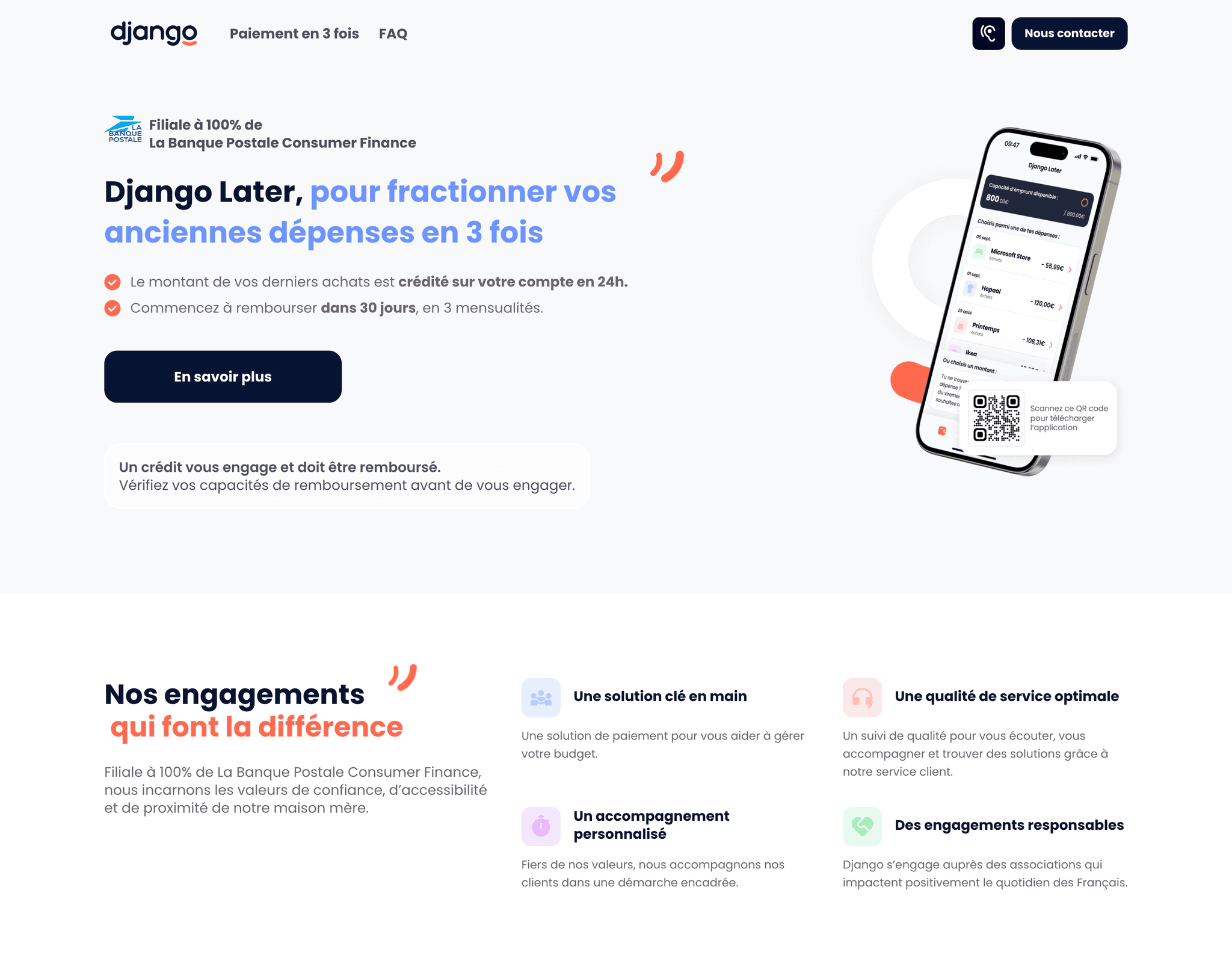
Django is a subsidiary of La Banque Postale, a major French bank. It focuses on Buy Now, Pay Later and credit solutions for consumers, operating in a highly regulated environment.
The challenge
Django needed a headless CMS that could integrate seamlessly with its React and Next.js stack, while remaining fully compliant with GDPR and internal requirements.
At the same time, the marketing team needed autonomy to manage content without relying on developers, while ensuring that all updates remained consistent with strict brand and compliance guidelines.
Discovery and decision
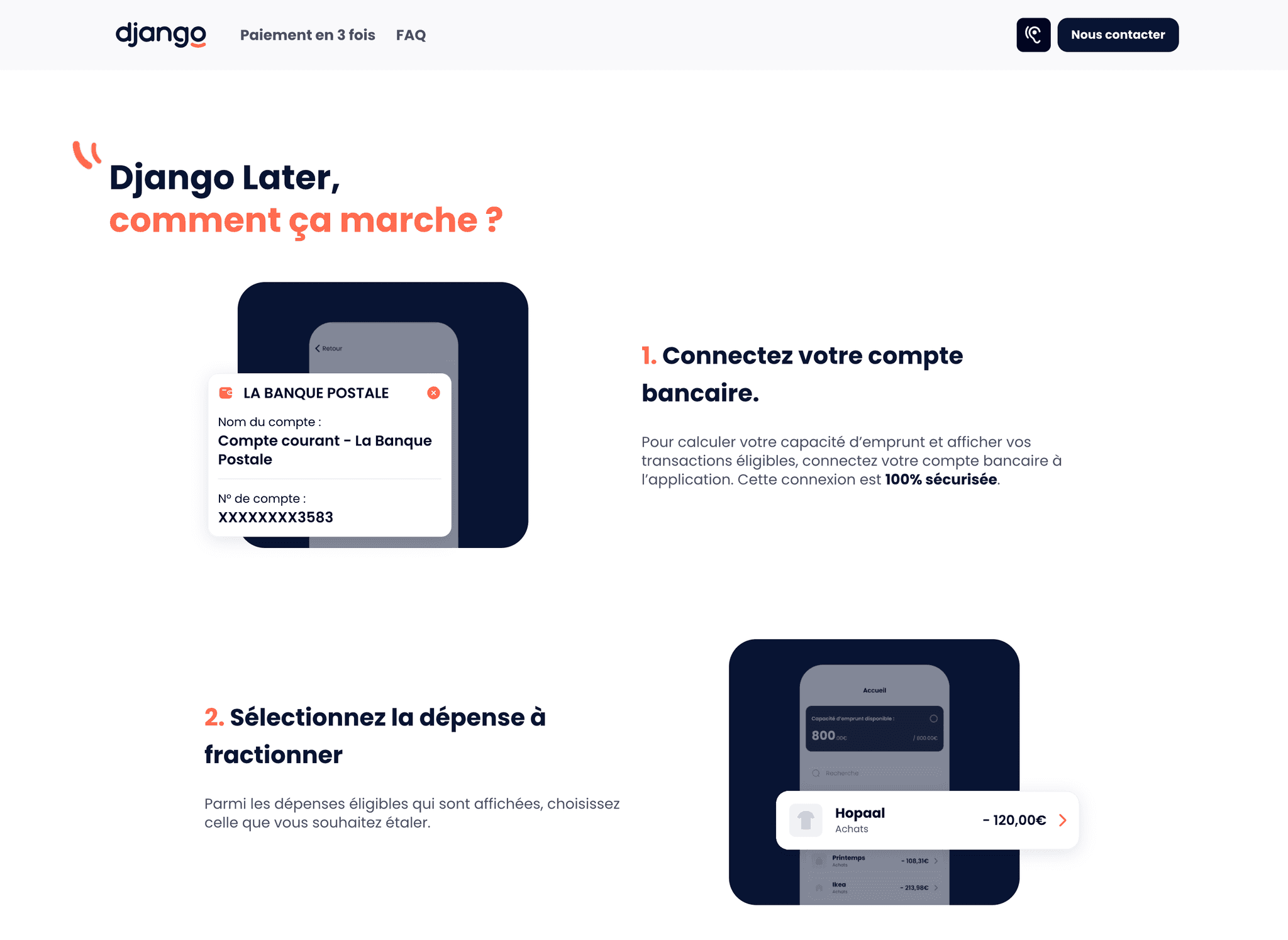
Django selected React Bricks as a React-based CMS with visual editing capabilities that could integrate naturally with its existing technology stack.
The ability to use React components with TypeScript, combined with data residency in Europe, made it a strong fit for both technical and compliance requirements.
At the same time, the visual editing experience allowed the marketing team to update content quickly and independently.
“The development experience was very good. The website reflects our values and BNPL services. It's easy for both the developers and the marketing team to maintain and update.”

Alexandre Leclercq
CTO @ Django
Implementation
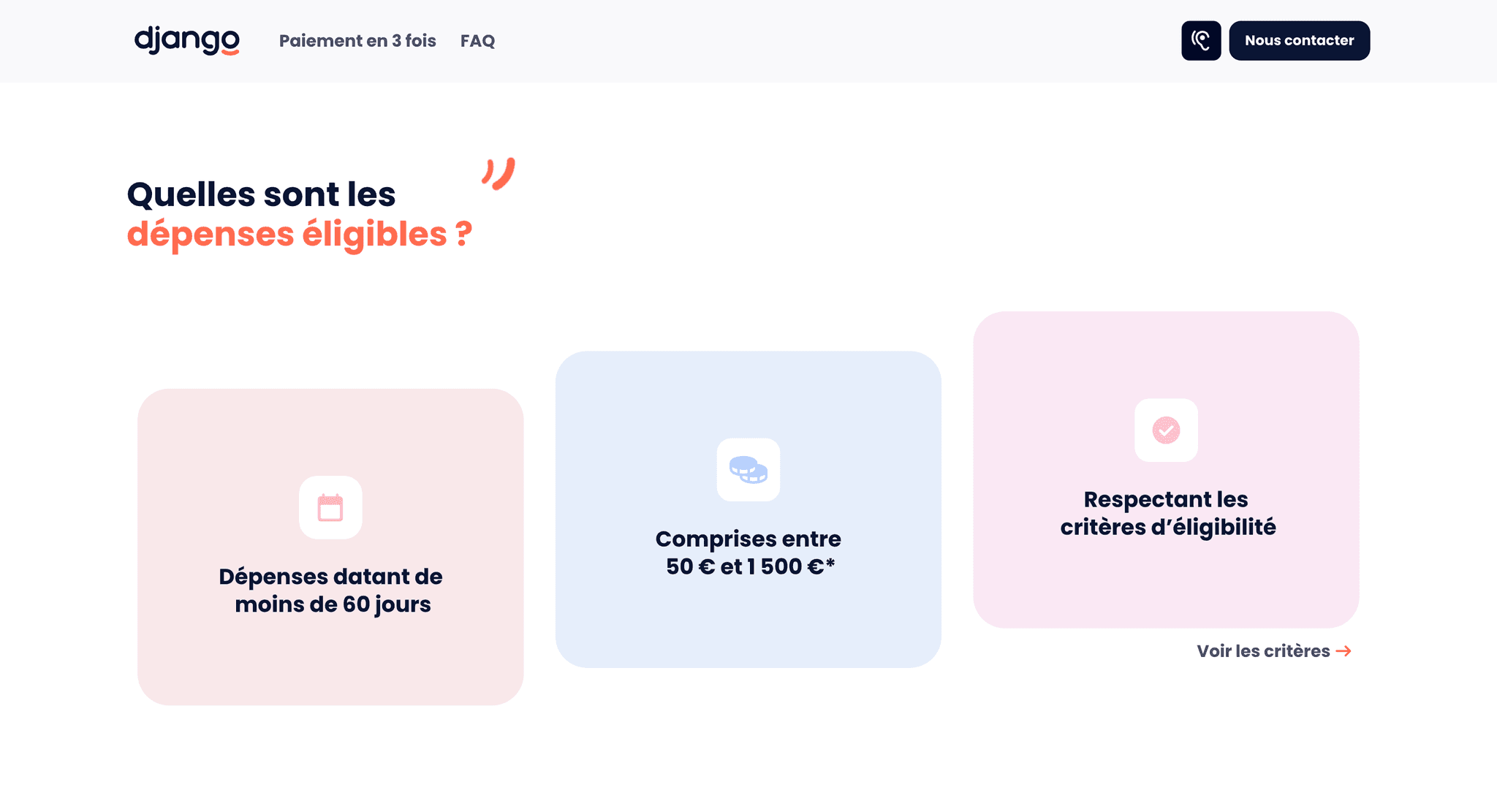
The development team created a set of reusable React components that define the design system of the website. These components are then used within React Bricks, allowing the marketing team to compose pages visually while maintaining full consistency with brand and compliance requirements.
Results
The new website provides a reliable and scalable platform that meets both technical and compliance requirements. The visual editing interface allows the marketing team to update content easily, while the component-based structure ensures consistency and control.
This balance reduces dependency on developers and enables faster updates, without compromising the integrity of the brand or regulatory constraints.